


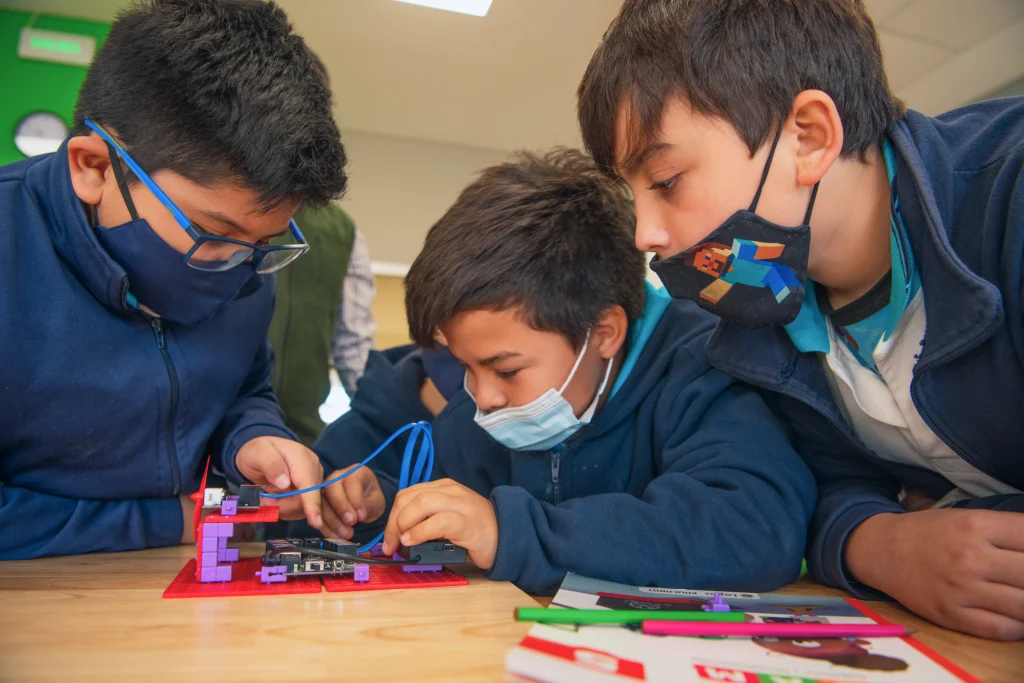
Educational robotics is the discipline that is revolutionising the way we see and do things. Not only does it enrich students’ education in every respect, but it also fosters their all-round development as individuals. Without a doubt, a generation equipped with the skills taught through robotics and programming will make a real difference. It is time for us, as a school, to give students the tools so that they may be true agents of change in the future.
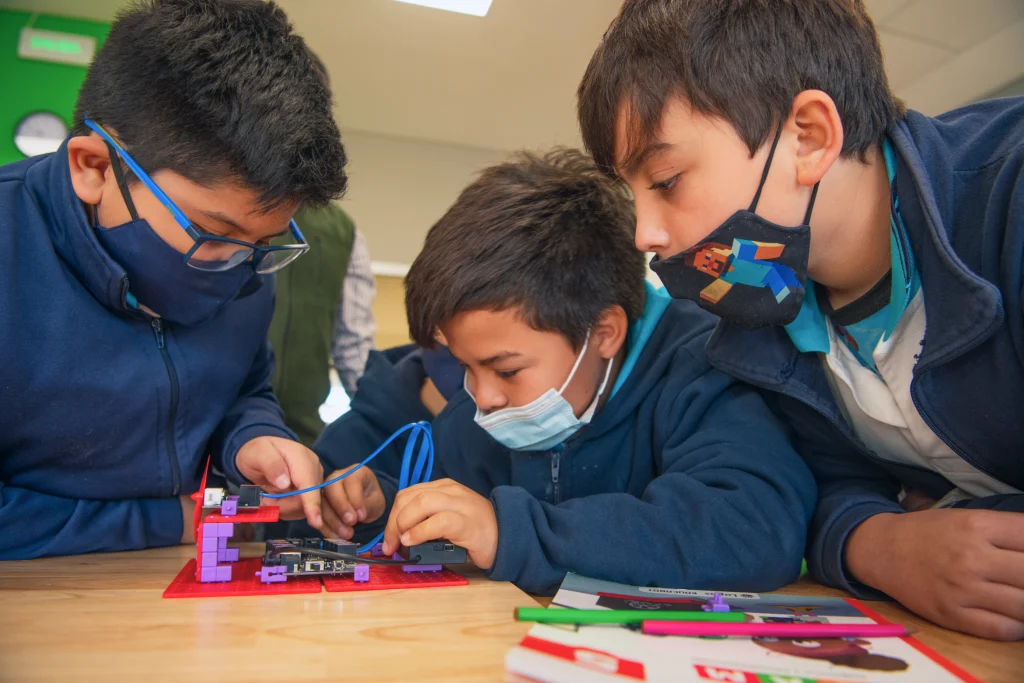
Teaching robotics to girls, boys and young people will result in a generation of people who are equipped to use technology and robotics to their advantage. It will enable them to develop innovative projects, understand the world around them in a different way, and even foster and awaken an interest in the sciences – engineering, mathematics, etc. –.
Educational robotics, being centred on STEM education, offers skills based on Science, Technology, Engineering and Mathematics, and develops skills such as teamwork, creativity, critical thinking, reasoning skills, and problem analysis and resolution.
There are two main ways in which programming and robotics are used in education. On the one hand, the robotics and educational programming, which consists of a set of physical components that encourage pupils to build, programme, reason and create new interfaces or devices. On the other hand, the robotics and programming as a social factor in which, through games, autonomous systems interact with humans or other physical agents.
It is essential that schools today are prepared to introduce programming and robotics into the classroom. Not because it is fashionable or because it is a matter of status, but because The future generations depend on the acquisition of these skills.
Would you like to receive further information?
If you work at an educational institution and are interested in the project, we can arrange a presentation.
Let’s take a look at some of the many BENEFITS that teaching robotics in the classroom brings:
1. Greater motivation
Tangible devices such as robots boost motivation because students get to handle things from the real world. This inevitably introduces a dimension of marvel -in the literal sense- to the learning experience: children get incredibly excited when they realise that what they are doing on a screen also has a place in the physical world.
2. Motor skills
Working with tangible objects involves hands-on activities that promote the development of motor skills, hand-eye coordination and different ways of understanding abstract ideas.
3. Flexibility for teachers
Whilst robots and other physical elements have their appeal, they are not essential when it comes to teaching robotics and programming. Teachers can opt for a hybrid approach that combines the virtual and the physical, offering greater flexibility when implementing a project.
4. Teamwork
We must not forget that, as well as building and programming robots, the students actively work in teams, learning about science, technology, engineering and mathematics. This also gives them a global perspective, without limits or boundaries, opening up new avenues for their development.
5. Increased engagement in other disciplines
Activities centred on the use of robots can increase engagement with learning in other areas less closely related to technology, such as literature, through play and motivation. Their use can even enhance ethical, emotional and social development, based on the impact that, for example, a robot with social attributes can have on pupils.
6. Promotes personal development
Learning about robotics and programming achieves, amongst other things:
- Improving students’ technological literacy
- To build self-confidence in dealing with technical concepts and problems
- Enhancing the sense of presence and physical reality in increasingly digitalised environments
- To strengthen their understanding of their personal values and respect for others, whilst making responsible use of technology
- To help generate new ideas for applying technology to improve the environment around them (school, community, society).
It is therefore essential that schools are transformed and become true driving forces behind technological progress. Today’s children and young people are the agents of change and innovation of the future. If you would like us to support you in the process of introducing and implementing robotics and programming at your school, please leave us your details: