



Abstraction
Students learn to identify the relevant information in a situation or challenge, distinguishing between what is essential and what is incidental.
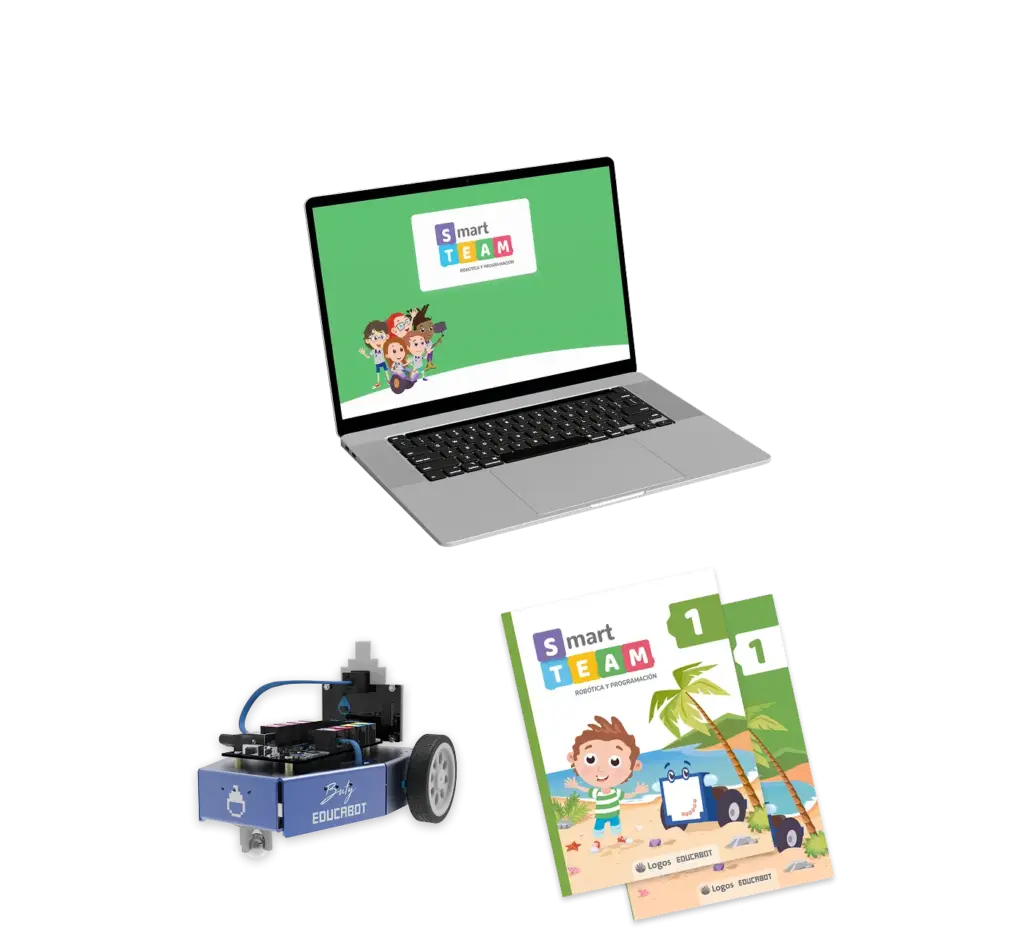
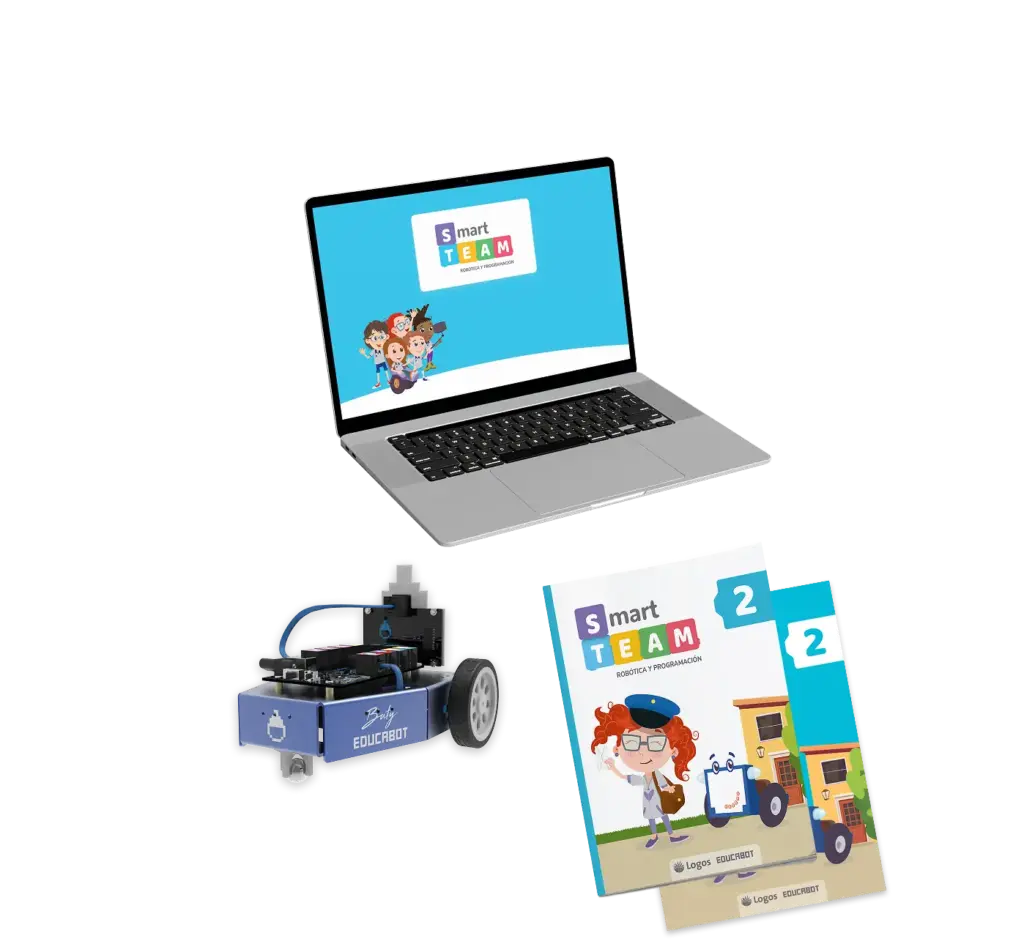
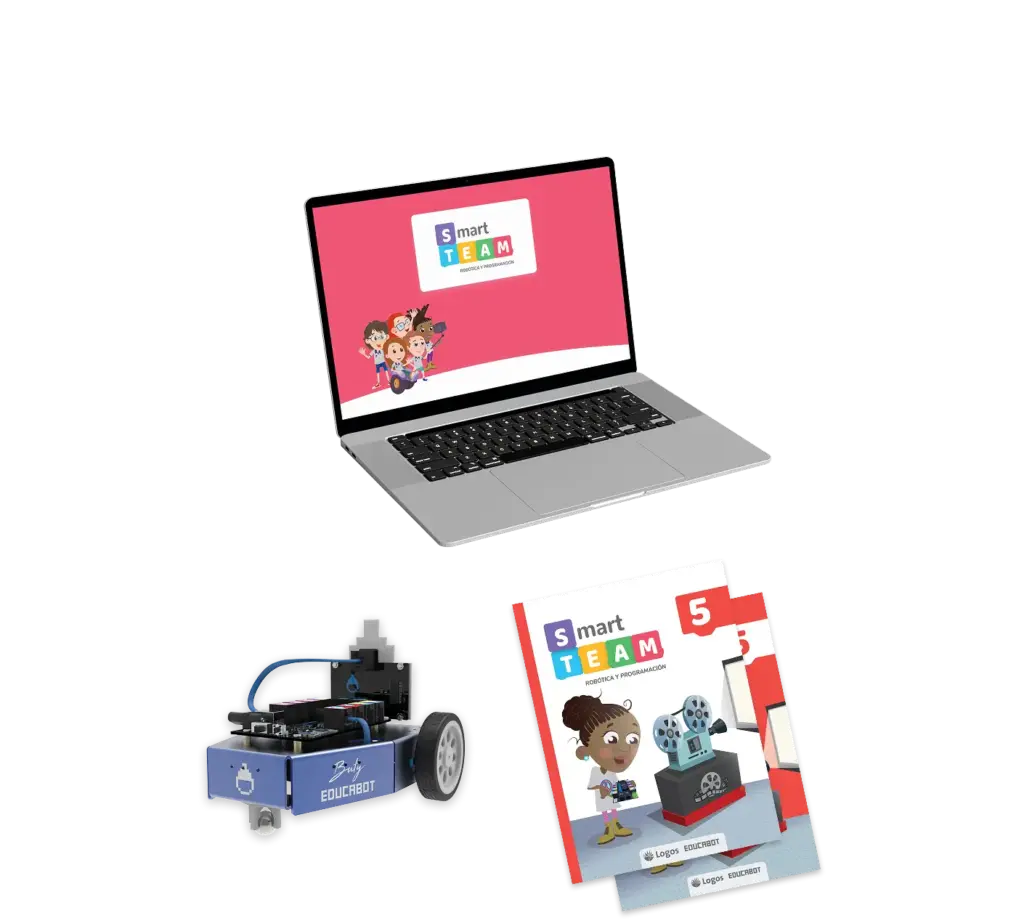
SmartTEAM supports schools in developing computational thinking, robotics, programming and artificial intelligence. The programme is organised into books by year group, using a project-based learning approach, interactive platforms, robotics kits tailored to each stage, and teacher training throughout the year.
Our value proposition: what we offer and how we deliver it

SmartTEAM promotes learning experiences through storytelling, integrating technology and robotics to enable students to experiment, create and collaborate in solving real-world challenges. The programme promotes teamwork, uses active and flexible teaching methods, and offers ongoing training for teachers, fostering a dynamic, personalised and motivating educational environment where pupils and teachers can develop their creative potential.

The STEAM approach, with a focus on educational robotics, promotes interdisciplinary and hands-on learning: pupils integrate science, technology, engineering, art and mathematics whilst designing, building and programming solutions to tackle real-world challenges. This approach fosters creativity, logical thinking and collaboration, and encourages students to apply knowledge from different subject areas in meaningful contexts.
Students learn to identify the relevant information in a situation or challenge, distinguishing between what is essential and what is incidental.
The activities encourage pupils to break down a complex problem into smaller, more manageable parts. Through specific challenges, pupils learn to plan their steps and tasks.
Pupils learn to recognise patterns and repetitions in actions and behaviour, linking what they have learnt in class to everyday situations.
Pupils construct ordered sequences of instructions to solve a problem or achieve a goal, whilst understanding how automated systems work.

Those interested in implementing a comprehensive digital education plan at the school, in line with the school’s educational mission.

Key figures within the organisation responsible for managing and monitoring the project, organising technological resources and liaising between teaching and management teams.

Teachers who wish to incorporate robotics and programming into their lessons, without the need for specific prior training, and who are looking to support their pupils in developing a new form of digital literacy.
It fosters creativity, logical thinking, problem-solving and collaborative learning through STEAM projects involving robotics and programming, linked to specific classroom challenges.
Storytelling and Project-Based Learning provide a clear context for learning: each project is experienced as an adventure, and students get involved by creating, testing and refining solutions.
This project has been designed by and for teachers: it includes teacher’s guides, supporting materials, assessment rubrics, ongoing training and support during and after implementation, making it easy for any motivated teacher to bring it into the classroom, even if they are not a specialist.