


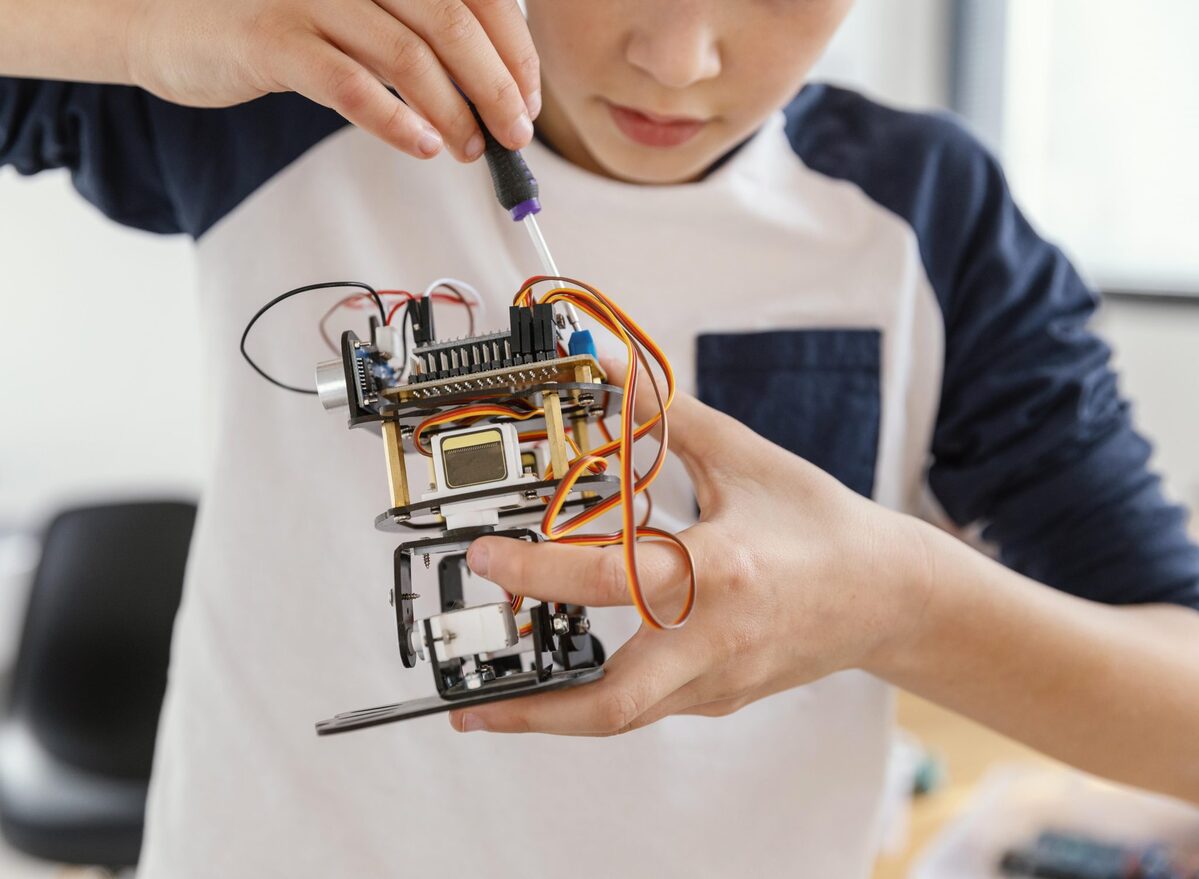
The robotics in education offers great opportunities to promote the all-round development of pupils. The teaching activities involved in the implementation of educational robotics foster creativity and strengthen pupils’ knowledge in specific subject areas. With a strong focus on education STEAM (Science, Technology, Engineering, Art and Maths), robotics aims to enhance computational thinking, promote problem-solving and teamwork, and encourage students to learning through play through the creation, programming and assembly of robots.
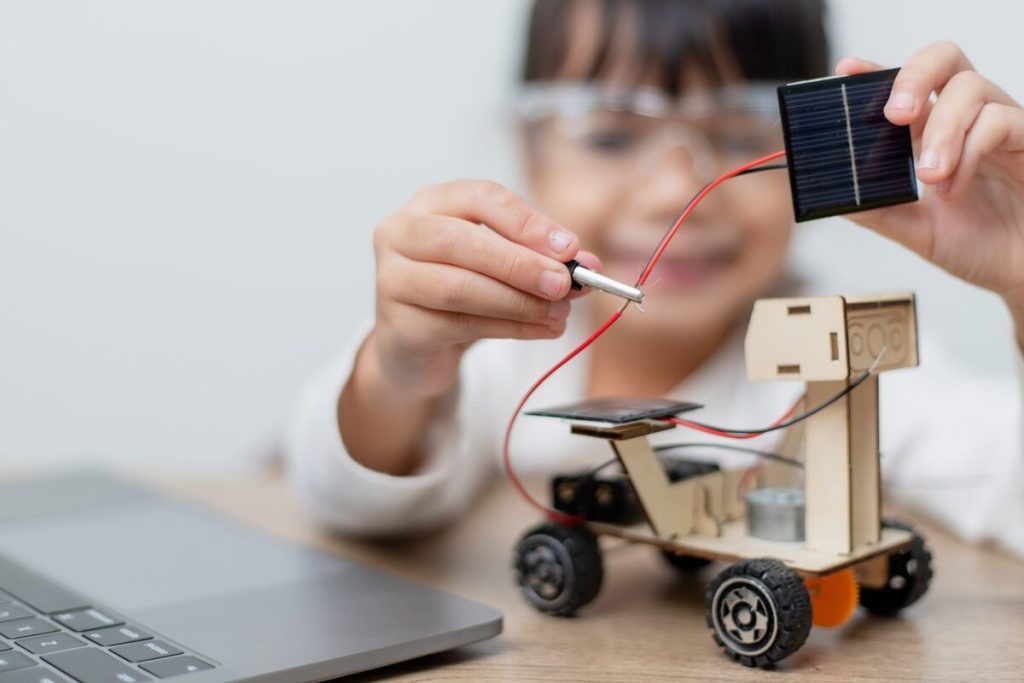
The aim of teaching robotics is to help students adapt to current production processes. This means that it goes beyond specific workplace applications. Rather, robotics aims to introduce children and young people to the sciences and technologies of today and tomorrow.
Through the design and development of robots, Educational robotics fosters decision-making skills, reflective thinking, information-seeking and teamwork. It also promotes the development of innovative, scientific, cultural, technological, communication and leadership skills.
Would you like to receive further information?
If you work at an educational institution and are interested in the project, we can arrange a presentation.
This interdisciplinary teaching system comprises the following components:
1. Robotics
It deals with the design, manufacture and applications of robots; it combines various disciplines such as mechanics, electronics, computer science, control engineering, artificial intelligence, algebra and programming.
2. Project
It creates interdisciplinary learning environments to address real-life situations and the world around them.
3. Innovation
It involves changes in the way we do things, think and live. Situations that are regarded as innovations often arise from the need to solve specific problems or to meet particular needs and demands.
4. Technology
It is the body of technical knowledge, organised and structured scientifically, which enables us to solve problems and meet individual and social needs.
5. Leisure
The concept encompasses all forms of play and activities that are regarded as free, particularly those that contribute to the enrichment of culture and education, thereby enabling students to create spaces for personal growth, interaction and holistic development.
6. Leisure time
It is the time set aside exclusively for rest, which comes after one has fulfilled various obligations.
The design of a teaching strategy based on educational robotics contributes to students’ personal growth and development. It is an innovative field of knowledge that combines teaching and recreation to promote the development of new skills through experience and the implementation of resources. These technological approaches and initiatives enhance the educational institution’s capabilities, contributing to the teaching and learning process at all levels of education; for through construction, simulation, programming and innovation, the individual’s cognitive spectrum is broadened, whilst simultaneously keeping them constantly engaged in the creation and refinement of their ideals.
The planning and implementation of an educational robotics strategy will bring about highly positive changes in cognitive development, as it lays the foundations for new ways of thinking, creating and innovating; it also strengthens individual creativity and develops communication and collaboration skills in a social context.
If you’d like to introduce and run an educational robotics project at your school but aren’t sure where to start, please leave us your details! Together we can plan specific strategies to make it happen: