


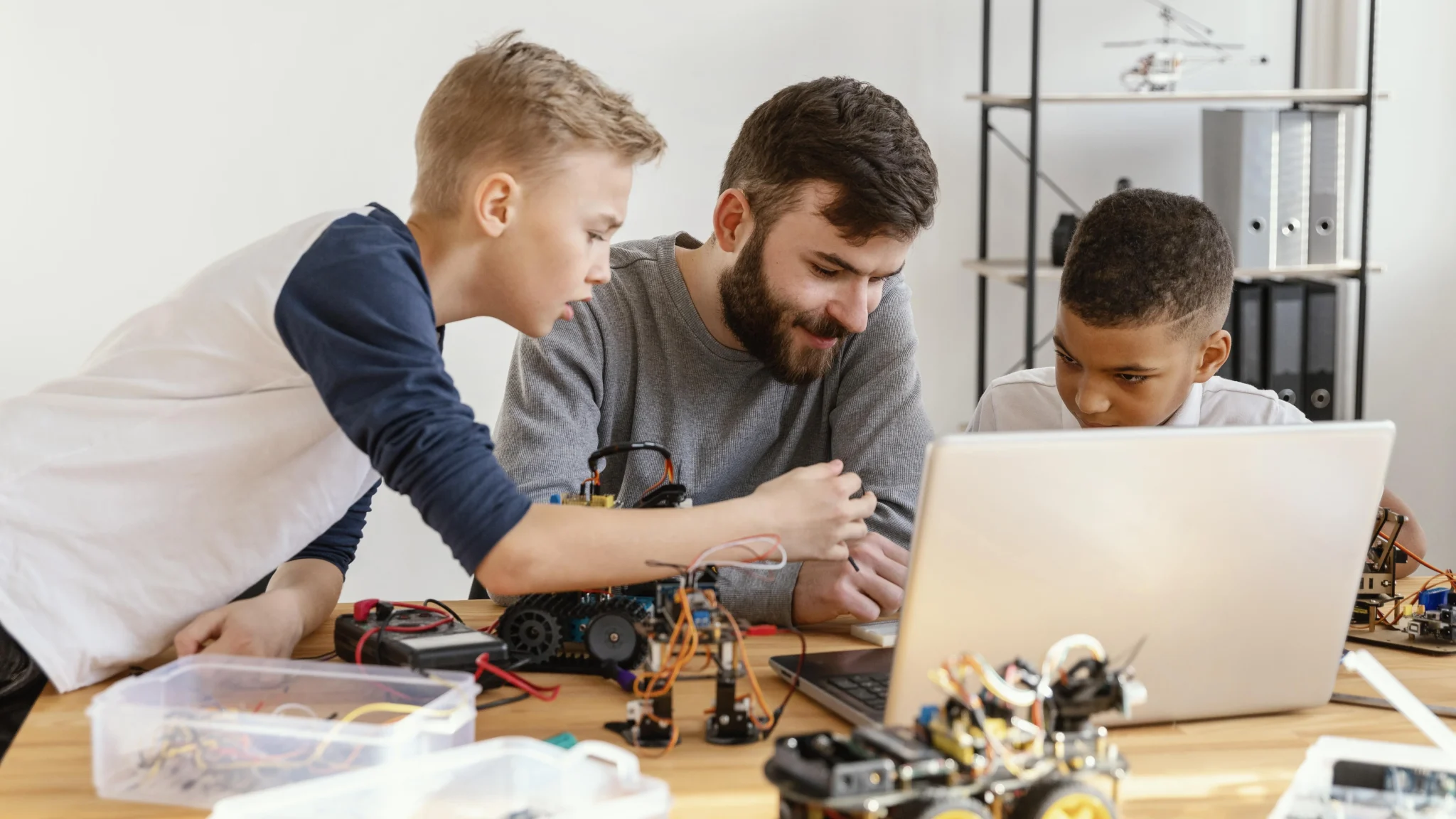
Project-Based Learning (PBL) is now one of the most popular active learning methodologies chosen by teachers who wish to improve the teaching and learning process. PBL aims to place students at the centre so that they become the true protagonists of their own learning.
Would you like to receive further information?
If you work at an educational institution and are interested in the project, we can arrange a presentation.
Using this methodology, pupils undertake a process of inquiry and creation that culminates in answering a question, solving a problem or creating a product. As defined by Marisol Mañá and Josefina Arrighi (year), PBL is “a learning experience in which pupils are guided, through meaningful questions, to explore, discover and understand the real world.”
PBL, in turn, has two main objectives: to ensure meaningful learning for pupils and to develop their skills. In other words, PBL aims for pupils to gain experience of some aspect of their reality and, in turn, to learn the skills necessary to thrive in the world: knowing how to do, knowing how to solve problems and knowing how to create.
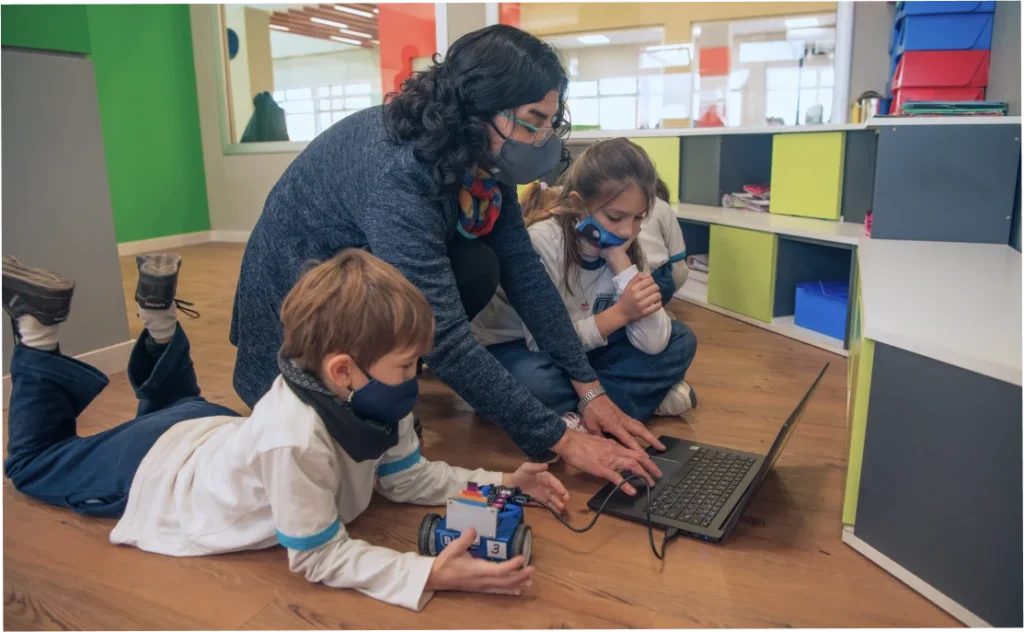
Our educational project has been conceived and designed specifically with this methodology in mind. The learning experience offered by the SmartTEAM books focuses on robotics and computational thinking – two areas of computing that, given the technological advances we are witnessing today, it is essential to understand and develop in the classroom. Each project presents a different problem and, in order to solve it, pupils must take on the wonderful challenge of building a robot prototype, working in teams and using the robotics kit provided by SmartTEAM.
Through PBL, we pursue two objectives: to promote active, high-quality and meaningful learning amongst students, and to foster the development of various skills. In this way, students not only learn by doing, but also develop fundamental skills such as collaborative working, communication, critical and creative thinking, and so on. By the time students complete a SmartTEAM project, they will have put into practice the skills of dividing up tasks, recognising each other’s strengths and weaknesses, assigning roles, discussing ideas and sharing possible solutions with their classmates.
Finally, it is worth noting that SmartTEAM is a project designed by teachers for teachers, which is why it includes a support programme and a range of tools for each stage of implementation. Every SmartTEAM book also comes with a Teacher’s Guide, which includes all the explanations and activities needed to implement the projects successfully.